

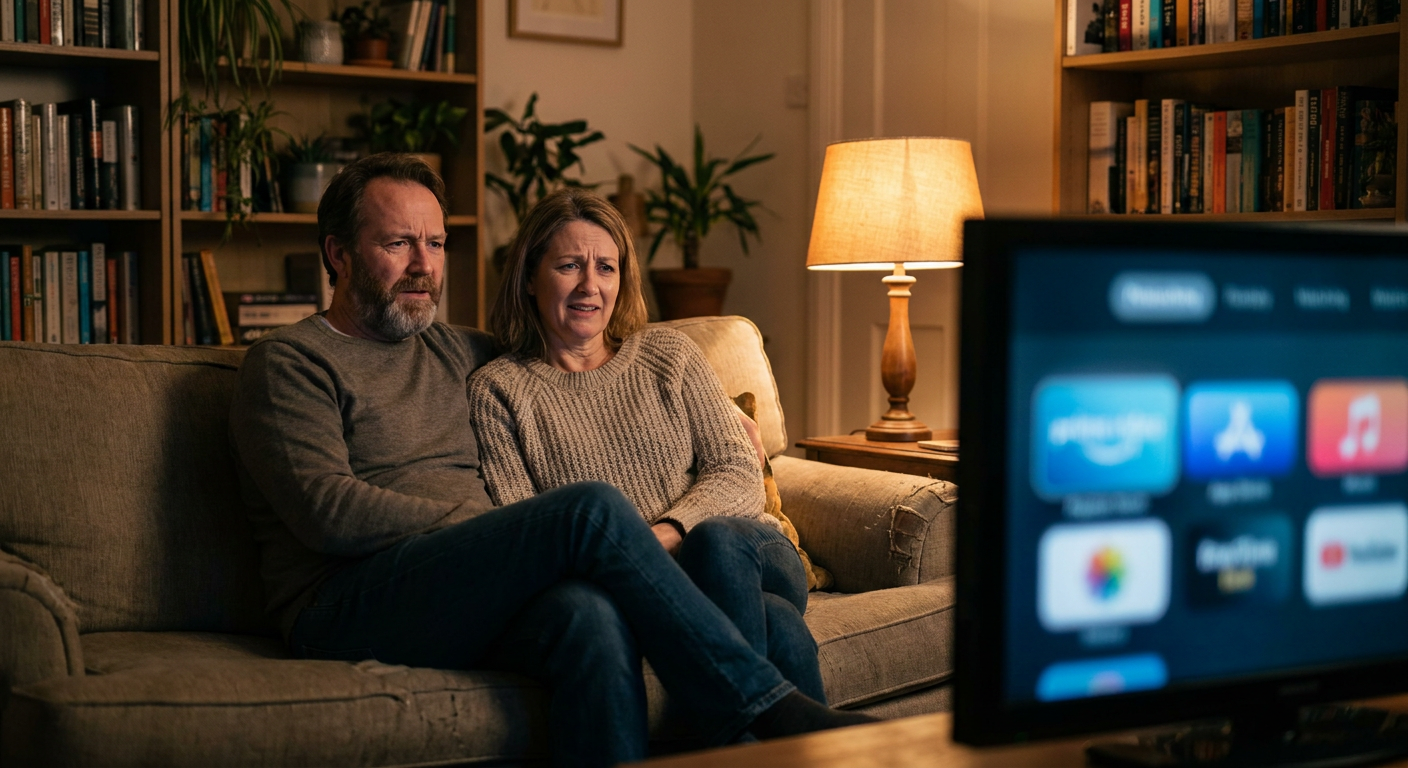
You've signed up for a few streaming services, hoping for endless entertainment, but now you find yourself endlessly scrolling, unable to pick something to watch. Instead of enjoying a relaxing evening, you're stuck in a loop of decision paralysis, wondering if you're paying too much for content you rarely consume.
It's a common problem. Almost half of streaming users in the United States feel overwhelmed by the sheer amount of programming available.
The real issue isn't a lack of options; it's the inability to easily discern true value from the endless stream.
This guide will help you understand why you feel this way, diagnose the specific issues plaguing your streaming habits, and provide a clear path to optimizing your subscriptions so you can finally relax and enjoy your downtime.
Why Your Streaming Bill Feels Too High (Even If It Isn't)
That nagging feeling that you're overpaying for streaming isn't just in your head. According to Deloitte's 2025 Digital Media Trends report, 47% of U.S. consumers believe they pay too much for their current services.
The problem, however, isn't always the raw dollar amount on your credit card statement. More often, it's a mismatch between cost and perceived value.
This dissatisfaction stems from a simple truth: affordability is a major concern for everyone in 2026, as value for money leads across all age groups, with more than a third of consumers ranking it as their top priority.
If you're paying for three or four services but only watching one or two, your "value meter" is in the red. You feel overextended because you're paying for potential you're not using, which turns a source of relaxation into a source of low-grade financial guilt.

Are You Suffering from Streaming Hopping or Decision Paralysis?
To fix the problem, you first need to identify your specific symptom. Most people fall into one of two camps: decision paralysis or streaming hopping.
Decision paralysis is the classic "too much choice" problem. You open an app, scroll for 20 minutes, and then either give up or rewatch a comfort show for the tenth time.
You likely feel overwhelmed by the volume of content and are probably subscribed to multiple large, overlapping services. Your issue isn't a lack of things to watch, but a lack of clarity on what's worth your time.
Streaming hopping, on the other hand, is a more active form of frustration. This means you subscribe to a service to watch one specific show, cancel it when you're done, and then re-subscribe a few months later for another one.
This "churn and return" cycle is surprisingly common, with 24% of consumers doing it regularly. If this sounds familiar, you're not saving as much as you think; you're just creating administrative hassle and potentially paying more due to forgotten subscriptions or introductory offers that have expired.
You can learn more about the hidden costs of content hopping and how it affects your budget.
How to Build a Smarter Streaming Lineup in 2026
Once you know whether you're a paralyzed scroller or a serial hopper, you can build a lineup that serves your actual habits, not your aspirational ones. This process requires a quick audit to replace emotional choices with a clear, logical framework.
A 2026 analysis from MoffettNathanson by analyst Robert Fishman provides a useful quality benchmark for this process, ranking Disney as the highest quality streaming service, followed by HBO Max and Apple TV+.
"The MoffettNathanson analysis led to a ranking topped by… drumroll, please!… Disney, followed by HBO Max. Disney, “on the strength of its unmatched franchise depth and sports portfolio, and HBO Max, driven by the prestige of both its series and films.”
Using this kind of quality assessment as a starting point, you can curate a more intentional and satisfying streaming stack.
| Service | Best For | Price Tier (Approx.) | Key Content |
|---|---|---|---|
| Disney+ | Household variety & franchise fans | Mid-Tier | Marvel, Star Wars, Pixar, Sports |
| HBO Max | Prestige drama & blockbuster films | Premium | HBO Originals, Warner Bros. films |
| Apple TV+ | High-production original series | Low-Tier | Critically acclaimed originals |
| Crunchyroll | Anime fans | Low-Tier | Extensive anime library |
Here's a simple, four-step process to get it right:
- Audit your usage for one month. Don't change anything yet. Just track what your household actually watches. Be honest. How many services did you not open even once?
- Identify your "Core Four." Look at your list. Which four shows or movies did you enjoy the most? Where do they live? This helps you identify your "anchor" service, the one you truly can't live without.
- Build around quality and niche interests. Instead of signing up for every major platform, start with one high-quality anchor service. Then, supplement it with a cheaper, niche service that caters to a specific interest, like anime on Crunchyroll, which was voted the best standalone, on-demand streaming service in a customer survey in 2026.
- Use a comparison tool to fill the gaps. Once you have your anchor and your niche, you can use a tool to compare different streaming services side-by-side to find the best home for any other "must-have" content without adding redundant platforms.

Choose Quality if You Hate Searching, Quantity if You Crave Variety
The audit process forces a fundamental choice: are you optimizing for quality or quantity? There's no wrong answer, but being honest about your preference is key to ending decision fatigue.
Choosing quality means subscribing to one or two services known for prestige content, like HBO Max or Apple TV+. You'll have fewer shows, but the signal-to-noise ratio is much higher.
You'll spend less time scrolling and more time watching critically acclaimed series and films. This is the best path for people who hate searching and just want to be told what's good.
Choosing quantity is for households with diverse tastes or viewers who love channel surfing. You might keep three or four services to cover everything from reality TV to kids' cartoons and live sports.
This approach is still popular; over 90% of Nielsen survey respondents plan to maintain or increase their number of subscriptions. The trick is to be intentional about it.
Pick services with minimal content overlap. In 2026, platforms are making this easier by focusing on bundling, pricing recalibration, advertising expansion, and spending discipline rather than just subscriber growth, creating more logical combinations for users.
What to Watch Out For Before You Optimize Your Subscriptions
Before you start canceling and subscribing, keep a few things in mind. The streaming landscape is constantly changing, and a perfect lineup today might be obsolete in six months.
First, be wary of impulsive decisions. Subscription fatigue is real, and a recent Deloitte survey found that 39% of respondents canceled at least one paid SVOD service in the six months prior to March 2026.
While cutting costs is a primary driver for many, ensure you're not just reacting to a temporary content drought on one service.
Second, remember that cost-cutting was the top reason for cancellations in 2025, with 30% of consumers citing it as the main reason, overtaking content availability for the first time. This signals a permanent shift in consumer mindset.
As you rebuild your lineup, set a firm monthly budget and stick to it. Don't let a flashy new show tempt you into creeping back over your spending limit.
The goal is sustainable enjoyment, not a cycle of binging and canceling.