

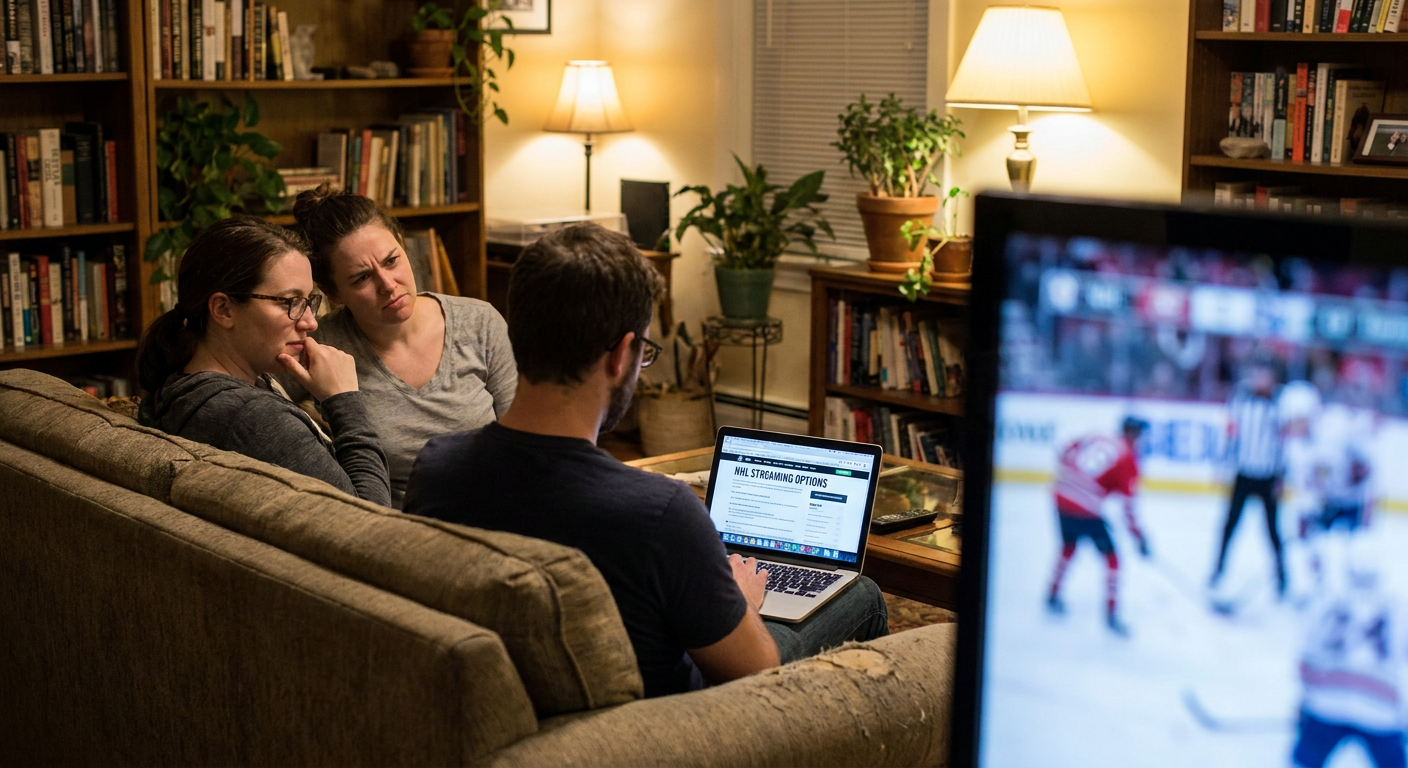
You might think watching every NHL game without cable means juggling multiple apps, wrestling with blackouts, and missing your local team. For years, the idea of a complicated, patchwork setup has kept many hockey fans tied to expensive cable contracts.
The good news is that this belief is outdated. You don't need a cable subscription to watch the puck drop, follow your favorite team all season, or even stream the Stanley Cup Playoffs.
The real challenge isn't navigating a complex web of services; it's simply choosing the right live TV streaming service that consolidates everything you need.
This guide will show you exactly how to do that. We'll break down why the old belief seemed true, what has changed, and provide a clear checklist to help you pick the right service so you're ready for the entire NHL season.
The Myth: Cord-Cutting for NHL is a Patchwork Mess
You want to watch hockey without the high cost and long-term commitment of a cable package. Yet, it often seems the consensus is that cutting the cord for sports, especially for the NHL, requires a dizzying combination of apps, subscriptions, and maybe even a VPN to get around blackouts.
Many people believe it's a "patchwork mess" that isn't worth the hassle. This idea keeps countless fans from making the switch, worried they'll miss crucial games or lose access to their local team's broadcasts.
Why This Belief Sounds Right: The Legacy of Local Broadcasts and RSNs
Understanding the source of this confusion is the first step in seeing why it's no longer accurate. The belief that streaming NHL games is complicated isn't unfounded; it's rooted in how hockey has been broadcast for decades.
Game rights have traditionally been split between national broadcasters and a web of Regional Sports Networks (RSNs).
For years, your local team's games were exclusively on an RSN, which was only available through a local cable provider. Meanwhile, high-profile national games aired on channels like ESPN or TNT.
To get complete coverage, you needed a cable package that included both. This fragmentation created the assumption that no single service could possibly offer everything, forcing cord-cutters into what they thought would be a frustrating hunt for games each night.
The Reality: Live TV Streaming Services Offer a Unified Solution
That old, fragmented landscape is precisely what live TV streaming services were built to fix. Instead of being a patchwork solution, they now offer a unified one.
These platforms have become the go-to for cord-cutting hockey fans for one simple reason: they bundle everything you need in one place.
The most straightforward way to watch NHL games is with a live TV streaming service that includes the key national channels and, crucially, the RSNs that carry your local team's games. This approach consolidates your hockey viewing into a single app and a single monthly bill, eliminating the need to juggle different subscriptions.
For fans who want comprehensive coverage without the complexity, these services are the answer. You can easily find services that offer the right sports streaming options to fit this model.

What's Actually True: Your NHL Streaming Checklist for 2026
The real problem isn't about juggling multiple services; it's about choosing the right single service. To ensure you have full access for the 2026-2027 season, you just need to verify that a streaming platform checks a few key boxes.
Before you subscribe, run through this simple checklist:
- National Channel Access: Does the service include ESPN, TNT, and ABC? These are essential for nationally televised games and the Stanley Cup Playoffs.
- Regional Sports Network (RSN) Coverage: This is the most important part for following your local team. Does the service carry the specific RSN that broadcasts your team's games in your area?
- Out-of-Market Games: If you follow a team that isn't local, you'll need a plan for out-of-market games, which are primarily handled by ESPN+. This is a separate subscription but works alongside a live TV service.
- ZIP Code Verification: This is the single most important step. Always use the service's website to enter your ZIP code and confirm which RSNs and local channels you will receive before you sign up.
Here's a simplified look at how different channel types cover the NHL season:
| Feature | Key Channels Included | Best For |
|---|---|---|
| National Games | ESPN, TNT, ABC | Watching nationally televised matchups and playoffs |
| Local In-Market Games | Regional Sports Networks (e.g., Bally Sports, Altitude) | Following your hometown team's regular season |
| Out-of-Market Games | ESPN+ (separate subscription) | Fans living away from their favorite team's city |
| Stanley Cup Playoffs | ESPN, TNT, ABC, TBS | Comprehensive postseason coverage |
By focusing on a service that meets these criteria, you can build a complete, simple, and cable-free NHL viewing experience. A good starting point is to review the top sports streaming options and see how they stack up against your checklist.
Which NHL Streaming Service is Right for You?
The right service for you depends entirely on what kind of fan you are. There's no single "best" option for everyone, but you can make a clear choice based on your viewing habits.
-
Choose a full-featured live TV service if… you are a die-hard fan of your local team. Your top priority should be finding a service that carries your specific RSN. This is non-negotiable for watching the vast majority of regular-season games.
-
Choose a more budget-friendly or basic plan if… you're a casual fan who mainly cares about the biggest matchups and the playoffs. A service without your RSN but with strong national channel coverage (ESPN, TNT) might be sufficient and more affordable.
-
Consider adding ESPN+ if… you live outside your favorite team's broadcast area. This service provides access to most out-of-market games, making it essential for displaced fans.
To see how different platforms stack up on channels and pricing, you can compare streaming services in 2026 and find the package that aligns with your needs.
What to Watch Out For When Streaming NHL
While streaming offers a simpler path to watching hockey, there are a few things to keep in mind. The biggest factor is blackout restrictions.
These rules are determined by league broadcasting agreements and still apply to streaming. If a game is airing on your local RSN, it will likely be blacked out on national channels or out-of-market packages like ESPN+ in your area.
This is why having RSN access is so critical for local fans.
You'll also need a reliable internet connection. Streaming live sports, especially in high definition, requires consistent bandwidth to avoid buffering and deliver a smooth experience.
Finally, be aware that prices for live TV streaming services can change, just like cable. Keep an eye on your subscription costs and re-evaluate your choice annually.
Learning how to get more for less from streaming services will help you ensure you're always getting the best value.
Verify Your Coverage and Enjoy the Season
With this framework, you're ready to make a confident decision. The final, most important step is to confirm the details before you commit.
Go to the website of the streaming service you're considering, find their channel lineup tool, and enter your ZIP code.
This will show you exactly which local channels and, most importantly, which Regional Sports Networks are available in your specific location. Once you've confirmed that you'll get the coverage you need for your team, you can sign up with peace of mind.
You'll be all set for puck drop without the cost and complexity of a traditional cable subscription.