

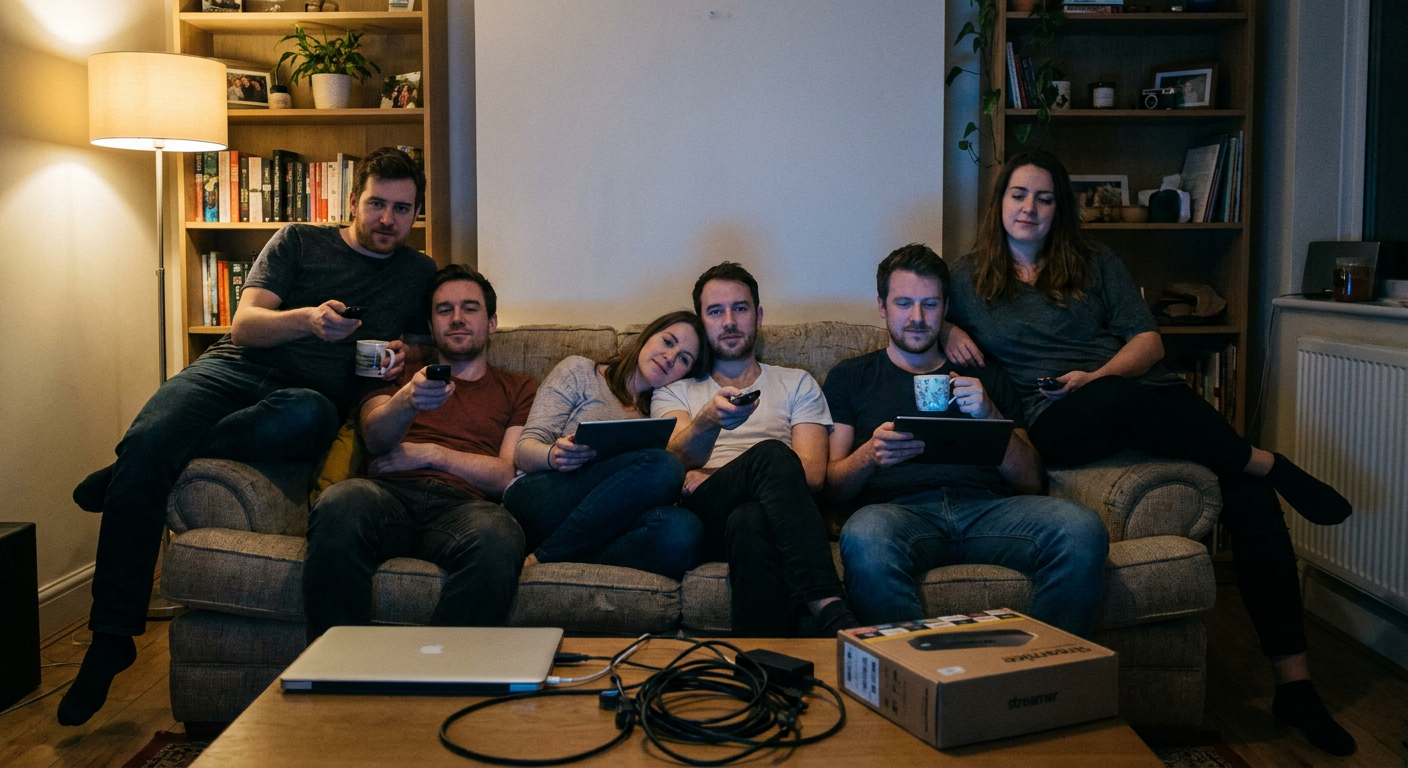
If you still have a traditional cable subscription, you might feel like one of the last people holding on. That monthly bill keeps arriving, often higher than the last, for hundreds of channels you never actually watch.
You keep it because it's familiar, it works, and the thought of switching seems like a massive headache.
But this inertia is becoming harder to justify. By 2026, an estimated 80.7 million U.S. households will have cut the cord, a clear signal that the great untethering from cable is the new normal.
So the real challenge today isn't if you should cut the cord, but how to do it without getting overwhelmed by choices, overspending on subscriptions, or missing your favorite shows. This isn't about simply swapping one big bill for ten small ones; it's about fundamentally rethinking how you watch TV.
This guide will walk you through:
- Understanding the new streaming-first landscape.
- Calculating the real costs and benefits for your household.
- Choosing a clear, simple strategy to start with.
- Building a starter lineup that you can adjust over time.
What Does a Streaming-First World Look Like?
For decades, pay TV was the undisputed king of home entertainment. You signed up with a local provider, a technician installed a box, and you had access to everything in one place.
That era is definitively over. Streaming is no longer the alternative; it's now the default.
While a significant number of households still had pay TV in late 2025, the momentum behind streaming is undeniable. The industry is watching subscribers leave in record numbers.
In 2025 alone, 6 million subscribers dropped pay TV, marking the largest one-year decline ever recorded.
As Wall Street analyst firm MoffettNathanson put it, "The high prices helped drive 6 million subscribers to drop pay TV last year, in the industry's largest decline ever." That figure doesn't happen in a vacuum; it represents a fundamental shift in how people value and access entertainment. It's the difference between a fixed, one-size-fits-all bundle and a flexible, on-demand menu.
For a deeper look at how this dynamic has evolved, you can explore the 2026 cord-cutting evolution.
The days of the cable box being the center of the living room are fading, replaced by smart TVs and streaming devices that put the viewer, not the provider, in control. As of late 2025, only about 34.4% of U.S. households still held on to a traditional pay-TV subscription, making them the minority.
Why the Shift from Cable Matters for Your Wallet and Watchlist
Understanding this new landscape is one thing, but what does it actually mean for you? The two biggest implications are financial savings and personal choice.
Cable companies have historically relied on bundling hundreds of channels together, forcing you to pay for content you don't watch just to get the handful of channels you do.
The most immediate and tangible benefit of cutting the cord is cost. With the average pay-TV bill approaching $110 a month, the potential for savings is substantial.
Even with a handful of streaming subscriptions, most cord-cutters spend significantly less than they did on a cable package bloated with regional sports fees, broadcast surcharges, and equipment rental costs.
Beyond the savings, cutting the cord gives you unparalleled control. You are no longer locked into a 12- or 24-month contract.
You can subscribe to a service for one month to binge a specific show, then cancel. You can rotate services based on the season, picking up sports-focused packages during the playoffs and dropping them in the offseason.
The power shifts from the provider's bundle to your personal watchlist.
Choose Your Path: How to Tailor Your Cord-Cutting Strategy
Once you're ready to make the change, the sheer number of options can feel paralyzing. The key is to avoid trying to replicate your 500-channel cable package.
Instead, start with a simple strategy based on what you actually watch.
Here are two primary paths to consider for your initial setup:
Choose basic on-demand streaming if...
You primarily watch scripted shows, movies, and documentaries. You aren't concerned about watching events like sports or news live as they air, and your goal is maximum savings.
This path also works well if you don't mind waiting for shows to become available after they air. It's the simplest and most cost-effective option, and it's a route a growing number of people are taking; 11% of Americans say they have only ever used streaming services.
- Your Starter Kit: Pick one or two foundational services (like Netflix, Hulu, or Max) and supplement with a free service (like Peacock's free tier or Pluto TV).
- Estimated Monthly Cost: $20 - $40.
Combine live TV and on-demand streaming if...
You can't live without live sports, your local news broadcast, or network TV finales. You want the "channel-surfing" experience of cable but without the contract and high price tag.
A live TV streaming service (like YouTube TV, Hulu + Live TV, or Sling TV) can replicate the core of the cable experience. This hybrid approach is also quite popular, with about 32% of Americans subscribing to both cable and streaming, showing a desire for both live access and on-demand content.
- Your Starter Kit: Choose one live TV streaming service and supplement with one on-demand service for a deeper library of movies and originals.
- Estimated Monthly Cost: $70 - $100.

Building Your First Streaming Lineup: What Habits Still Matter?
After you've picked a general path, the next step is to get specific about which services to subscribe to. The most common mistake new cord-cutters make is signing up for too many services at once, which leads to "subscription creep" and erases the cost savings you were hoping for.
The key is to audit your own viewing habits before you spend a single dollar.
For one week, pay close attention to what you and your family actually watch. Make a list of the must-have channels and shows.
Be honest: Do you really watch that channel, or do you just scroll past it every day? Once you have your list, you can start matching your needs to specific services.
This is where a bit of research pays off. Many shows are available on multiple platforms, and some networks have their own dedicated streaming apps.
Don't assume you need the most expensive package to get the one channel you care about. Use comprehensive TV guides to see which services carry your essential channels and shows.
This simple homework can be the difference between a smart, lean streaming setup and a chaotic, expensive mess.
What to watch out for
Cutting the cord is a fantastic way to save money and gain control, but it's not without a few potential pitfalls. The biggest challenge is managing the very freedom that makes streaming so appealing.
With no single provider managing your entertainment, that responsibility falls squarely on you.
Subscription creep is the most common issue. A free trial converts to a paid subscription, you add a service for a single sports season and forget to cancel it, or a new "must-see" show pops up on yet another platform.
Before you know it, you could be paying as much as you did for cable. The solution is to be a vigilant manager of your own subscriptions.
Set calendar reminders to review your services every few months. Ask yourself: "Did I watch this in the last 30 days?
Is it worth paying for another month?"
Another consideration is your internet connection. Streaming, especially in 4K, requires a stable, high-speed internet connection.
Before you cancel your cable, make sure your internet plan can handle the increased load, especially if you have multiple people streaming at once. If your connection is unreliable, your streaming experience will be frustrating.